In February 2026, AGC Automotive Europe ran MEGA Learning's Strategy Execution business simulation for 100 of its managers at a Châteauform venue in Germany. The objective was to connect every manager's strategic decisions, on pricing, capacity, investment, and product positioning, to the company's cash flow statement.
About AGC Automotive Europe
AGC Automotive Europe is the European automotive glass division of AGC Group, the world's largest glass manufacturer. Headquartered in Belgium and part of AGC Inc. (formerly Asahi Glass, Tokyo), AGC Automotive Europe supplies windscreens, side windows, roofs, and rear windows to nearly every major car manufacturer worldwide. One car in four carries AGC glass.
AGC Automotive Europe operates in a highly competitive automotive supply environment where margins are tight, capacity planning is critical, and cash flow discipline is essential. The company employs thousands of people across multiple European production sites.
The Challenge: Make Cash Flow Everyone's Responsibility
Cash flow had been a strategic priority at AGC Automotive Europe for a long time. The leadership team understood its importance. Quentin Fraselle, CEO and member of the Senior Leadership Team at AGC Automotive Europe, wanted to go further: he wanted every manager in the organisation to understand not just what cash flow is, but how their daily decisions influence it.
The objective was clear. Give 100 managers from AGC Automotive Europe's management team the tools and the mindset to connect day-to-day strategic choices, including product positioning, pricing, investments, and capacity planning, to the company's financial health. Move cash flow from being finance's problem to being everyone's responsibility.
The Solution: MEGA Learning's Strategy Execution Simulation
AGC Automotive Europe selected MEGA Learning's Strategy Execution simulation for the programme. Strategy Execution is a fast-paced, team-based business simulation where participants take over a company managing two product lines (low-cost and premium) and compete to optimise profitability while integrating sustainability considerations.
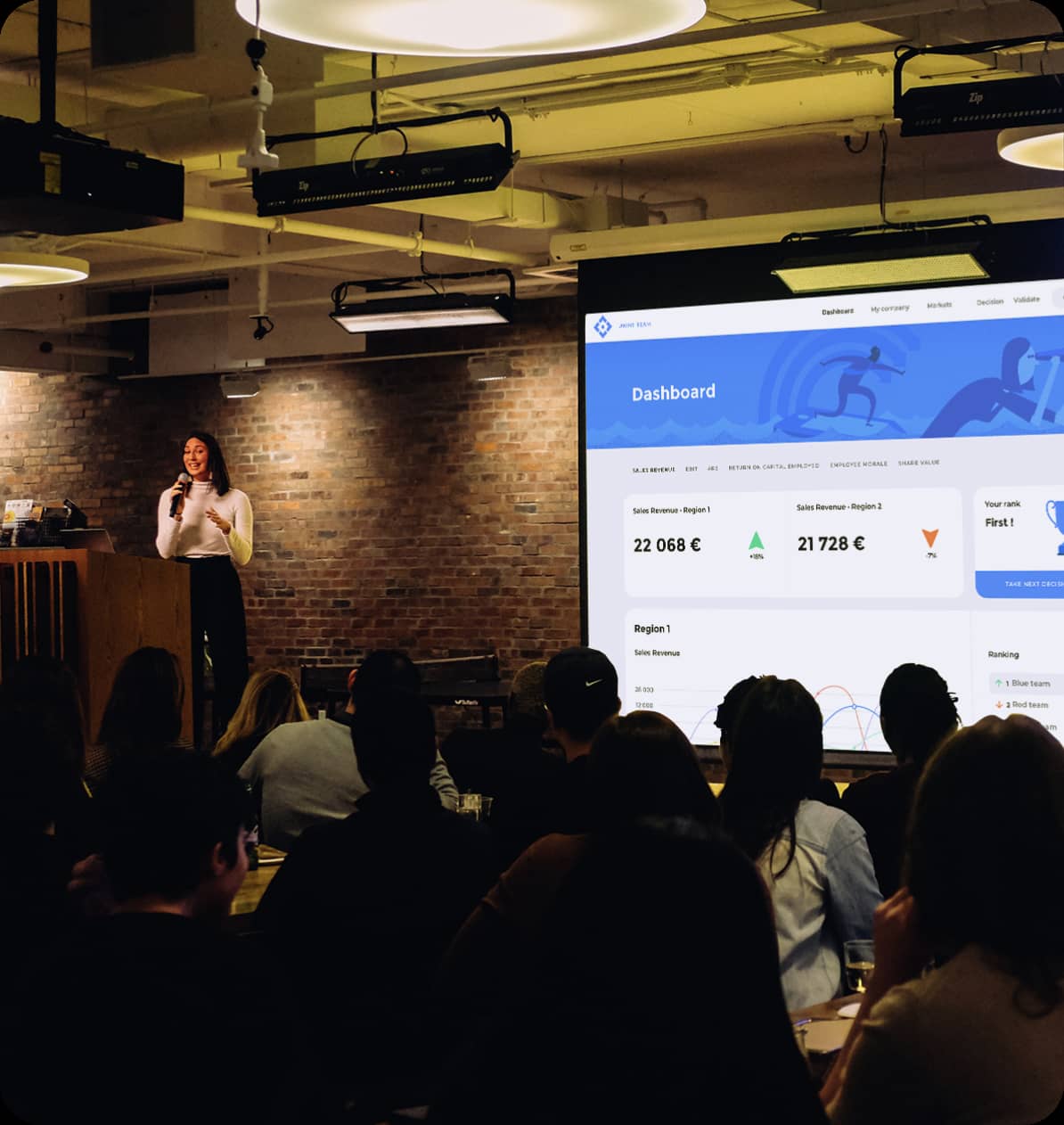
The format was a full-day workshop in February 2026 at a Châteauform venue in Germany. AGC Automotive Europe's 100 managers were divided into competing teams. Over the course of the day, each team made strategic decisions across marketing, engineering, pricing, production capacity, cost management, and investments, experiencing firsthand how each choice affects revenue, margins, and ultimately cash flow.
All teams started from identical conditions. The market evolved dynamically based on competitor decisions and customer reactions. There was no textbook answer to copy. Only the consequences of each team's strategic choices.
What Happened in the Workshop
Engagement was immediate. From the first decision round, AGC Automotive Europe's managers were debating strategy, challenging assumptions, and discovering, sometimes the hard way, how interconnected business decisions really are.
The competitive format created strong learning anchors. Participants did not just learn about the link between strategy and cash flow. They experienced it. When a pricing decision eroded margins, they saw it in their P&L. When a capacity investment did not pay off, they felt the cash flow pressure. These are not lessons that fade after a slide deck.
What was most telling came after the simulation. Many AGC Automotive Europe participants wanted to go back and understand exactly where things went wrong. Not from frustration, but from genuine curiosity. They wanted to understand the cause and effect between their strategic choices and their financial results. That appetite to debrief and dig deeper is the signature of lasting learning.
What the CEO of AGC Automotive Europe Said
Quentin Fraselle, CEO of AGC Automotive Europe, was direct:
« Cela fait longtemps que l'on parle de cash-flow chez AGC, il était très intéressant de remonter la chaîne de valeur et les choix stratégiques pour comprendre comment influencer celui-ci, nous aurions dû faire cette simulation depuis longtemps... »
Translation: "We have been talking about cash flow at AGC for a long time. It was very interesting to go back up the value chain and the strategic choices to understand how to influence it. We should have done this simulation a long time ago."
When the CEO of a company supplying glass to one in four cars in the world says "we should have done this a long time ago," the simulation delivered.
About MEGA Learning's Strategy Execution Simulation
MEGA Learning's Strategy Execution business simulation is designed for corporate training (new managers through middle management) and university programmes focused on strategy and marketing. Participants manage a virtual company with two product lines across 3 to 4 decision rounds, making choices on:
- Marketing and product positioning
- Engineering and product features
- Pricing strategy
- Production capacity planning
- Cost management and investments
- Human and environmental impact
Duration: 4 to 12 hours. Available online, face-to-face, or blended. Suitable for groups from 6 to 500+ participants. Used by corporate training programmes including AGC Automotive Europe and by university programmes worldwide.
Learn more about the Strategy Execution simulation or request a free demo.